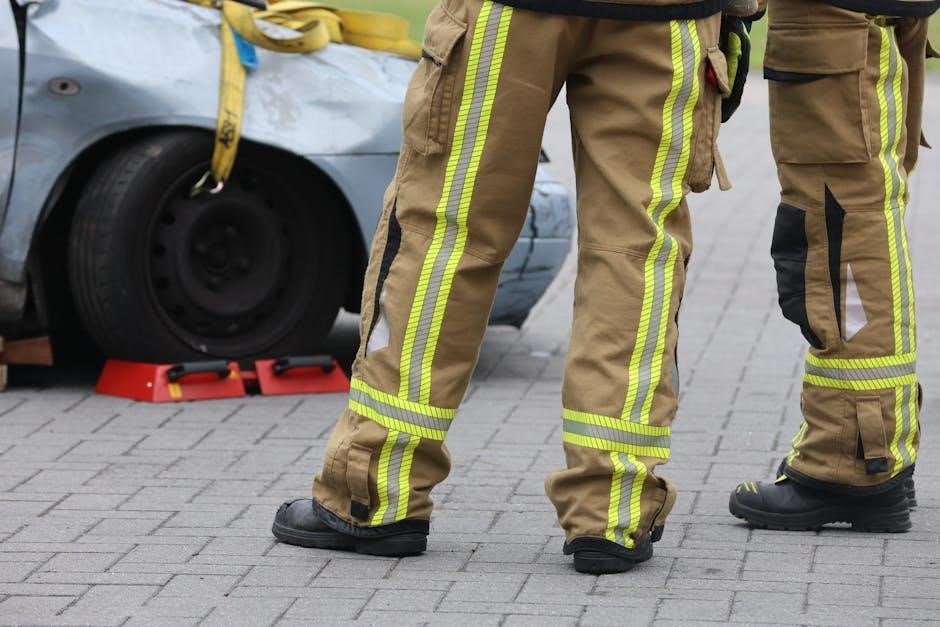
Firefighter roles demand exceptional physical capabilities, necessitating specialized training programs.
These routines, often detailed in a firefighter workout routine PDF,
are crucial for mitigating risks and enhancing on-the-job performance.
Understanding the unique physical stressors faced by firefighters is paramount for designing effective fitness regimens.
These programs prioritize strength, endurance, and injury prevention, ensuring personnel are prepared for any challenge.
The Demanding Physicality of Firefighting
Firefighting is arguably one of the most physically demanding professions, requiring a unique blend of strength, endurance, and agility.
Beyond simply lifting heavy objects, firefighters navigate treacherous environments, often while wearing substantial gear – sometimes exceeding 50 pounds.
This gear significantly increases physiological strain, demanding a heightened level of cardiovascular fitness and muscular strength.
Tasks like hose dragging, ladder climbing, forcible entry, and victim rescue necessitate explosive power and sustained muscular endurance.
The unpredictable nature of emergency situations means firefighters must be prepared for prolonged periods of intense physical exertion, followed by brief moments of rest.
A comprehensive firefighter workout routine PDF acknowledges these demands, focusing on functional movements that mimic real-world scenarios.
Furthermore, the risk of heat stress and dehydration adds another layer of complexity, emphasizing the importance of proper hydration and conditioning.
The job isn’t solely about brute force; it requires agility, balance, and coordination to navigate obstacles and maintain stability in challenging conditions.
Why a Specialized Workout is Crucial
A generalized fitness approach simply isn’t sufficient for firefighters; a specialized workout is paramount for both performance and safety.
Standard exercise routines often fail to address the specific physical demands of the job, leaving firefighters vulnerable to injury and hindering their effectiveness during critical incidents.
Many firefighters, despite perceptions, don’t meet basic physical activity standards, increasing health risks and impairing performance.
A well-designed firefighter workout routine PDF prioritizes functional strength, mirroring movements encountered on the fireground – lifting, carrying, pushing, and pulling.
This targeted approach builds resilience against common injuries like back pain and shoulder instability. Moreover, specialized training enhances cardiovascular endurance, crucial for prolonged exertion in stressful environments.
Investing in a tailored fitness program isn’t merely about physical preparedness; it’s about safeguarding lives – both those of the firefighters and the individuals they serve.
Proactive fitness reduces the likelihood of job-related injuries and ensures firefighters can operate at peak capacity when every second counts.
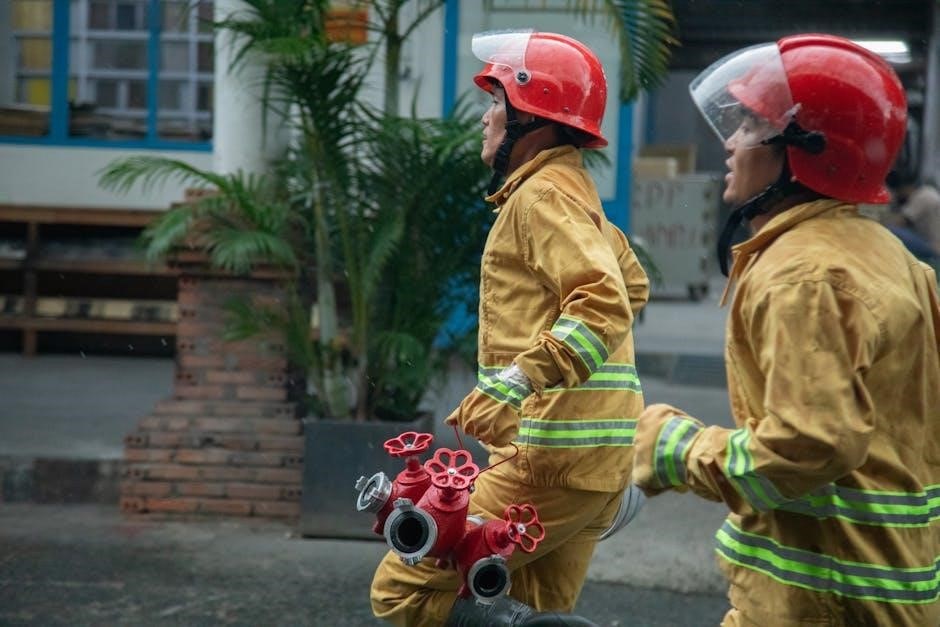
Understanding Firefighter Fitness Standards
NFPA 1582 establishes comprehensive medical programs and fitness benchmarks for firefighters, considering age and biological sex.
A firefighter workout routine PDF should align with these standards for optimal preparation.
NFPA 1582: The Core Standard
NFPA 1582, the Standard on Comprehensive Occupational Medical Program for Fire Departments, serves as the foundational guideline for firefighter fitness across the United States. This standard doesn’t prescribe a specific firefighter workout routine PDF, but it dictates the requirements for medical evaluations and physical ability assessments. It establishes a single benchmark for both candidate and incumbent firefighters, intelligently adjusting for factors like age and biological sex.
The standard emphasizes a holistic approach, encompassing cardiovascular health, muscular strength, and endurance. A well-designed firefighter workout routine PDF should therefore incorporate elements addressing each of these components. NFPA 1582 aims to ensure firefighters possess the physical capacity to safely and effectively perform essential job tasks, minimizing risk of injury and maximizing operational effectiveness. Regular adherence to fitness standards, guided by a suitable training program, is paramount for maintaining a healthy and capable fire service.
Age and Biological Sex Considerations
Developing a firefighter workout routine PDF requires acknowledging the impact of age and biological sex on physical capabilities. NFPA 1582 recognizes these variables, advocating for adjusted fitness standards. As firefighters age, natural declines in strength, endurance, and recovery rates necessitate modified training approaches. A routine designed for a 20-year-old will differ significantly from one for a 50-year-old.
Biological sex also plays a crucial role, with inherent physiological differences influencing muscle mass, body composition, and cardiovascular function. A firefighter workout routine PDF should offer tailored recommendations, potentially including adjusted weightlifting loads or cardio intensities. Ignoring these factors can lead to ineffective training, increased injury risk, and compromised performance. Prioritizing individualized programs ensures all firefighters can meet the demands of the job safely and effectively.
Current Fitness Levels in the Fire Service
Despite the perception of inherent fitness, research indicates a concerning gap between the physical demands of firefighting and the actual fitness levels of many personnel. Numerous studies reveal that a significant portion of firefighters do not consistently meet established physical activity standards, increasing their risk of health issues and hindering effective performance during critical incidents. A comprehensive firefighter workout routine PDF aims to address this disparity.
This necessitates a proactive approach to fitness, moving beyond sporadic training to consistent, structured programs. Implementing standardized fitness assessments, like the Firefighter Physical Fitness Test (FPFT), is crucial for identifying areas for improvement. A well-designed firefighter workout routine PDF should incorporate targeted exercises to enhance cardiovascular endurance, strength, and muscular endurance, ultimately bridging the gap and ensuring firefighter safety.
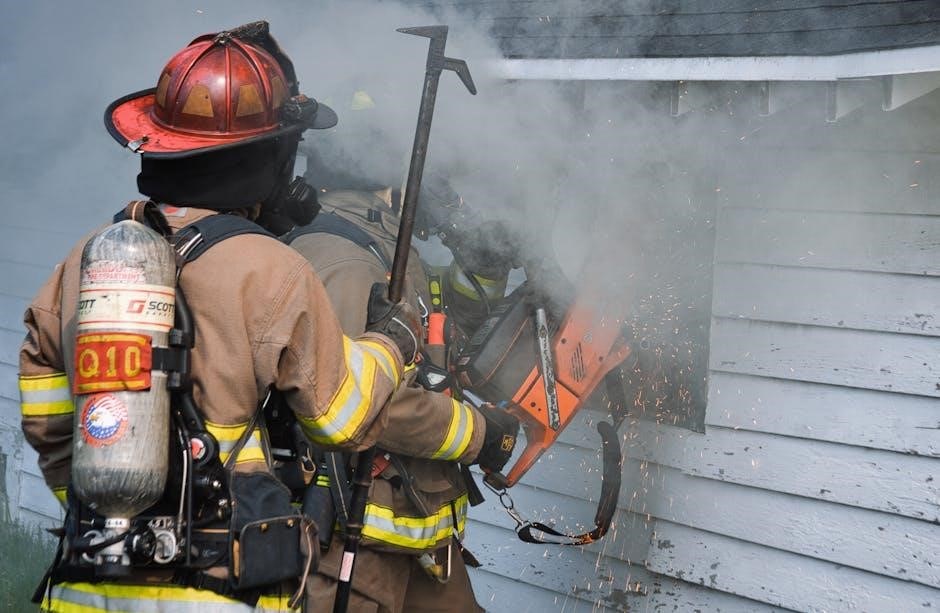
Key Components of a Firefighter Workout Routine
Essential elements within a firefighter workout routine PDF include cardiovascular training, strength building, and core stability exercises.
These components are vital for job performance and injury prevention.
Cardiovascular Endurance Training
Cardiovascular fitness is paramount for firefighters, demanding routines often outlined in a firefighter workout routine PDF. The job’s strenuous nature requires sustained exertion, necessitating robust endurance. Two primary approaches are commonly employed: High-Intensity Interval Training (HIIT) and long-duration, low-intensity cardio.
HIIT involves short bursts of intense activity followed by brief recovery periods, effectively improving both aerobic and anaerobic capacity. This mirrors the unpredictable demands of firefighting scenarios. Conversely, long-duration cardio, such as running or cycling at a moderate pace, builds a strong aerobic base, crucial for prolonged operations.
A well-rounded program integrates both methods. The PDF guides often suggest a blend, perhaps incorporating HIIT sessions twice weekly alongside longer, steady-state cardio workouts. Regular cardiovascular training reduces fatigue, enhances recovery, and minimizes the risk of cardiovascular disease – a significant concern within the fire service.
High-Intensity Interval Training (HIIT)
High-Intensity Interval Training (HIIT), frequently detailed within a firefighter workout routine PDF, is a cornerstone of effective firefighter fitness. It mimics the unpredictable, explosive demands of emergency situations, preparing the body for rapid shifts between high exertion and brief recovery.
Typical HIIT protocols involve short bursts – 30 to 60 seconds – of maximal effort, such as sprinting or burpees, followed by equal or slightly longer recovery periods. These intervals are repeated multiple times, creating a significant cardiovascular and metabolic challenge.
A PDF workout might prescribe ladder drills, shuttle runs, or hill sprints. The benefits extend beyond cardiovascular health; HIIT also boosts muscular endurance and improves anaerobic capacity. Crucially, it’s time-efficient, fitting into busy schedules. However, proper warm-up and cool-down are essential to prevent injury, as emphasized in many training guides.
Long-Duration, Low-Intensity Cardio
Complementing HIIT, long-duration, low-intensity cardio forms a vital component of a comprehensive firefighter workout routine PDF. This type of training builds a strong aerobic base, crucial for sustaining prolonged physical activity during firefighting operations – think extended searches or hose drags.
Activities like jogging, swimming, cycling, or brisk walking, maintained at a conversational pace for 30-60 minutes, are typical examples. These sessions enhance cardiovascular efficiency, improve oxygen delivery to muscles, and aid in recovery between high-intensity workouts.
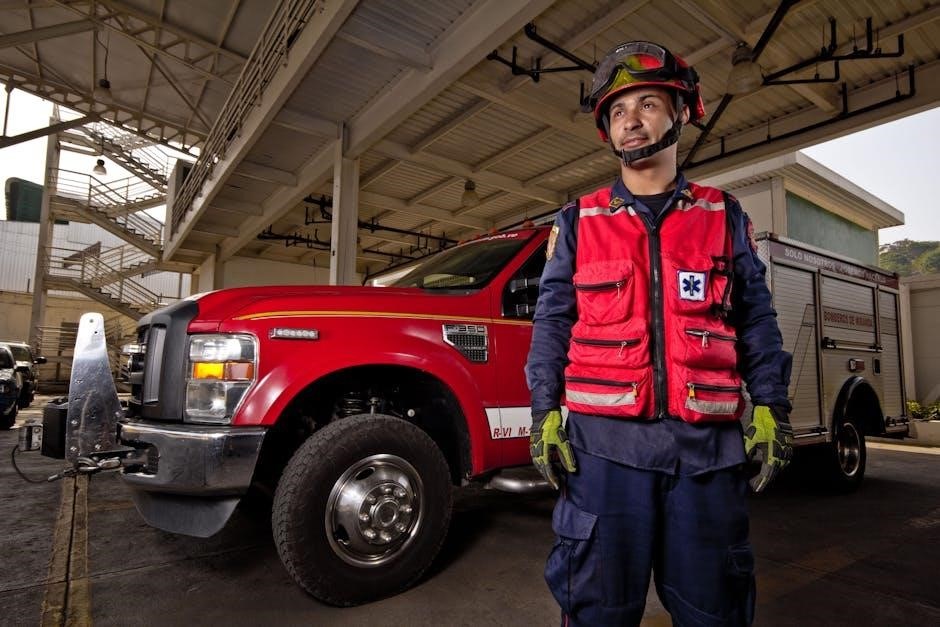
A PDF guide may suggest incorporating weighted vest walks to simulate the added burden of gear. While less glamorous than HIIT, this steady-state cardio is foundational for overall endurance. It reduces fatigue and supports the body’s ability to handle the cumulative stress of the job, promoting long-term health and performance.
Strength Training for Firefighters
Strength training is non-negotiable within a firefighter workout routine PDF, directly addressing the demands of carrying heavy equipment, forcible entry, and victim rescue. It’s not about building bulk, but developing functional strength – the ability to apply force effectively in real-world scenarios.
A well-structured program will prioritize movements that mimic firefighting tasks. This means focusing on exercises that build strength in the legs, back, core, and shoulders. A PDF resource will likely detail specific rep ranges and sets tailored to endurance and power.
Prioritizing proper form is paramount to prevent injuries. Strength training enhances the body’s ability to withstand stress, improves work capacity, and reduces the risk of musculoskeletal injuries common in the fire service. It’s a cornerstone of firefighter fitness.
Focus on Functional Strength
A firefighter workout routine PDF should heavily emphasize functional strength – movements that directly translate to tasks performed on the fireground. This differs from traditional bodybuilding, which prioritizes aesthetics. Functional strength builds resilience against the unpredictable physical demands of the job.
Exercises should mimic real-world scenarios: lifting, carrying, pushing, pulling, and twisting. Think beyond isolated muscle work; focus on integrated movements. A PDF guide will likely include exercises like farmer’s carries, sled pushes, and kettlebell swings, building strength applicable to hose handling and equipment transport.
Prioritizing functional strength improves work capacity, reduces injury risk, and enhances overall performance. It’s about building a body capable of handling the unique stressors firefighters face daily, ensuring they can effectively and safely perform their duties.
Compound Exercises: The Foundation
Any effective firefighter workout routine PDF will center around compound exercises. These movements engage multiple muscle groups simultaneously, mirroring the full-body demands of firefighting. They are far more efficient than isolation exercises for building overall strength and endurance.
Key examples include squats, deadlifts, bench presses, overhead presses, and rows. A well-structured PDF will detail proper form and progression for each. These exercises build a strong foundation, improving functional strength and preparing the body for heavy lifting and strenuous activity.
Compound movements also boost metabolic rate and hormone production, aiding in recovery and muscle growth. Prioritizing these exercises ensures firefighters develop the robust, resilient physiques needed to excel in their challenging profession.
Muscular Endurance and Core Stability
A comprehensive firefighter workout routine PDF doesn’t solely focus on maximal strength; muscular endurance is equally vital. Firefighting demands sustained physical exertion, requiring muscles to repeatedly perform tasks over extended periods. Exercises like high-repetition bodyweight circuits, farmer’s carries, and sled pushes build this crucial endurance.
However, endurance is ineffective without a stable core. Core strength is the linchpin for transferring power and protecting the spine during heavy lifting and dynamic movements. A good PDF will include planks, Russian twists, and medicine ball exercises.
Prioritizing core stability minimizes the risk of back injuries, a common ailment in the fire service. Integrating both muscular endurance and core work ensures firefighters possess the resilience needed to navigate demanding scenarios safely and effectively.
Importance of Core Strength
A robust core is non-negotiable for firefighters, and a detailed firefighter workout routine PDF will emphasize this. It’s not just about “six-pack abs”; core strength encompasses the entire midsection – abdominals, obliques, lower back, and even hip stabilizers. This muscular network provides a foundation for all movement.
During firefighting operations, firefighters frequently lift heavy equipment, twist, bend, and maintain awkward postures. A strong core protects the spine from injury under these loads, preventing debilitating back pain. It also enhances power transfer from the lower to upper body, improving efficiency.
Furthermore, core stability improves balance and coordination, crucial when navigating uneven terrain or operating in confined spaces. A well-structured PDF will outline progressive core exercises to build this essential foundation.
Exercises for Muscular Endurance
A comprehensive firefighter workout routine PDF will dedicate significant attention to muscular endurance – the ability of muscles to sustain repeated contractions over time. Firefighting demands prolonged physical exertion, requiring muscles to work tirelessly without fatiguing quickly.
Effective exercises include high-repetition bodyweight movements like push-ups, squats, lunges, and planks. These build endurance without requiring heavy weights. Incorporating exercises with resistance bands further challenges muscles. Circuit training, combining multiple exercises with minimal rest, is also highly beneficial.
Specifically, exercises mimicking firefighting tasks – hose drags, ladder raises, and simulated victim rescues – enhance functional endurance. A well-designed PDF will provide detailed instructions and progression guidelines for these exercises, ensuring firefighters can maintain performance throughout extended incidents.

Sample Firefighter Workout Routine (PDF Focus)
Firefighter workout routine PDFs typically structure training across phases, balancing strength, endurance, and recovery.
Frequency varies, but a common approach involves 3-4 workouts weekly,
prioritizing functional movements and progressive overload.
Workout Structure & Frequency
A comprehensive firefighter workout routine PDF will detail a structured approach to training, typically incorporating a phased methodology. Initial phases often emphasize building a foundational level of strength and muscular endurance, preparing the body for more demanding exercises. Subsequent phases then progress to power development and sport-specific conditioning, mirroring the dynamic demands of firefighting.
Frequency is a critical component, with most programs recommending 3-4 workouts per week. This allows for adequate recovery between sessions, minimizing the risk of overtraining and injury. A sample weekly structure might include two strength-focused days, one dedicated to cardiovascular endurance (HIIT or long-duration cardio), and one focused on core stability and muscular endurance.
Periodization, the systematic variation of training variables, is also commonly employed. This involves cycling through different training intensities and volumes to optimize adaptation and prevent plateaus. A well-designed firefighter workout routine PDF will outline a clear periodization plan, ensuring continuous progress and long-term fitness gains.
Warm-up Routine
A detailed firefighter workout routine PDF will invariably emphasize the importance of a thorough warm-up. This isn’t merely about increasing body temperature; it’s about preparing the musculoskeletal system for the stresses of intense training and, crucially, mimicking movements encountered on the fireground.
A typical warm-up should begin with 5-10 minutes of low-intensity cardiovascular activity, such as jogging or jumping jacks, to elevate heart rate and blood flow. This is followed by dynamic stretching, focusing on movements like arm circles, leg swings, and torso twists.
Specific exercises targeting key muscle groups – shoulders, back, and legs – are essential. Consider incorporating exercises like bodyweight squats, lunges, and shoulder rotations; A firefighter workout routine PDF should also include mobility drills to improve range of motion and joint flexibility, reducing injury risk during strenuous activity.
Workout Phase 1: Strength & Power
As outlined in a comprehensive firefighter workout routine PDF, the initial phase focuses on building a foundation of strength and power. This phase prioritizes compound exercises that engage multiple muscle groups simultaneously, mirroring the demands of firefighting tasks like lifting, dragging, and breaching.
Key exercises include squats (back and front), deadlifts, bench press, and overhead press. These should be performed with a focus on proper form and controlled movements. A typical routine might involve 3-4 sets of 6-8 repetitions for each exercise.
Power development is crucial; incorporate exercises like box jumps, medicine ball throws, and power cleans. A well-structured firefighter workout routine PDF will detail progressive overload principles, gradually increasing weight or resistance to continually challenge the muscles and enhance strength gains.
Workout Phase 2: Endurance & Core
Following the strength and power phase, a firefighter workout routine PDF will typically transition to endurance and core stability. This phase aims to improve the ability to sustain physical exertion over prolonged periods, vital during extended firefighting operations.
Cardiovascular endurance is built through interval training and longer-duration, low-intensity cardio, such as running, swimming, or cycling. Core stability exercises, including planks, Russian twists, and stability ball work, are essential for injury prevention and efficient movement.
A sample routine might include 30-60 minutes of cardio, followed by 3-4 sets of 15-20 repetitions of core exercises. The firefighter workout routine PDF should emphasize functional movements that mimic real-world firefighting scenarios, enhancing both performance and resilience.
Cool-down and Recovery
A comprehensive firefighter workout routine PDF doesn’t end with the last repetition; cool-down and recovery are critical components. These phases are essential for reducing muscle soreness, preventing injuries, and optimizing performance gains.
Cool-down activities should include 5-10 minutes of light cardio, such as walking or jogging, followed by static stretching, holding each stretch for 30 seconds. Focus on major muscle groups worked during the session.
Recovery strategies outlined in the firefighter workout routine PDF should emphasize adequate sleep (7-9 hours), proper nutrition, and hydration. Active recovery, like light swimming or yoga, can also aid muscle repair. Prioritizing recovery ensures firefighters remain physically prepared for demanding calls and minimizes the risk of overtraining.
Addressing Common Firefighter Injuries
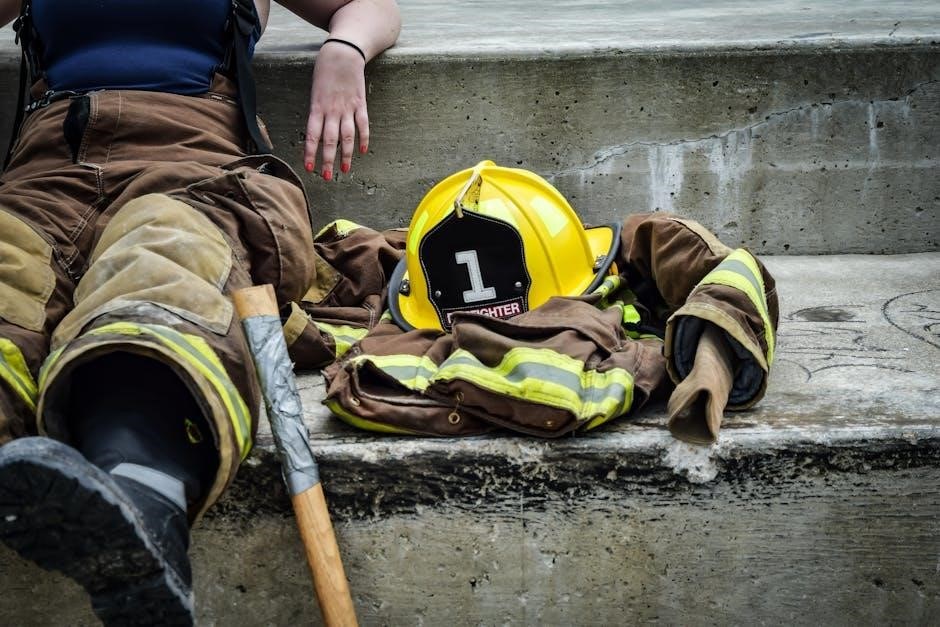
Firefighter workout routine PDF programs often integrate preventative exercises targeting back pain and shoulder instability.
Corrective techniques, as highlighted in recent studies, are vital for long-term health.
Preventative Exercises for Back Pain
Back pain is a prevalent issue among firefighters due to the physically demanding nature of the job, often involving heavy lifting and awkward postures. A comprehensive firefighter workout routine PDF should prioritize exercises that strengthen the core muscles – including the abdominals, obliques, and lower back – to provide a stable base of support.
Exercises like planks, bird-dogs, and dead bugs enhance core stability. Furthermore, incorporating exercises that improve hip mobility and flexibility, such as hip flexor stretches and glute bridges, can alleviate strain on the lower back. Strengthening the posterior chain – encompassing the glutes, hamstrings, and back muscles – is also crucial.
Proper lifting techniques, emphasized alongside these exercises, are paramount. Movement-guided training, focusing on spinal control during common firefighting movements (lifting, squatting, lunging), as noted in recent research, can significantly reduce injury risk. Regular stretching and foam rolling can also improve muscle flexibility and reduce tension, contributing to long-term back health.
Shoulder Stability and Injury Prevention
Shoulder injuries are common among firefighters due to repetitive overhead movements, carrying heavy equipment, and forceful exertions. A well-structured firefighter workout routine PDF must include exercises specifically targeting shoulder stability and strength. Rotator cuff exercises, utilizing resistance bands or light weights, are fundamental for reinforcing the muscles surrounding the shoulder joint.
Scapular stabilization exercises, such as scapular retractions and protractions, improve control of the shoulder blade, enhancing overall shoulder mechanics. Incorporating exercises that strengthen the muscles of the upper back, like rows and face pulls, further supports shoulder stability.
Focusing on proper form during all exercises is critical to prevent compensatory movements that could lead to injury. Corrective exercise techniques, as highlighted in studies comparing movement patterns of firefighters, can address and correct faulty movement mechanics. Regular stretching and mobility work targeting the shoulder joint and surrounding tissues are also essential for maintaining optimal shoulder health.
Corrective Exercise Techniques
Corrective exercise is a vital component of any comprehensive firefighter workout routine PDF, addressing movement impairments that can predispose individuals to injury. Research, like that conducted by Frost et al., emphasizes the importance of identifying and correcting faulty movement patterns common in firefighting tasks – lifting, squatting, lunging, pushing, and pulling.
These techniques aren’t about simply increasing strength; they focus on restoring proper biomechanics. Assessments should pinpoint areas of weakness, tightness, or imbalance. Targeted exercises then aim to improve mobility, stability, and neuromuscular control.
Examples include foam rolling to release muscle tension, dynamic stretching to improve range of motion, and activation exercises to engage underactive muscles. A movement-guided training approach, prioritizing execution of key movement patterns with spinal control, is particularly beneficial. Integrating these techniques proactively minimizes injury risk and optimizes performance.
Resources and Further Information
Explore the Firefighter Physical Fitness Test (FPFT) details and online resources for tailored fitness guidance.
Regular medical evaluations are essential for maintaining optimal health and performance.
Firefighter Physical Fitness Test (FPFT) Details
The Firefighter Physical Fitness Test (FPFT) serves as a crucial benchmark for evaluating a firefighter’s readiness and ability to safely and effectively perform essential job tasks. Often referenced within a comprehensive firefighter workout routine PDF, understanding the FPFT’s components is vital for targeted training.
The test typically includes events designed to assess cardiovascular endurance, muscular strength, and muscular endurance. Common elements include a stair climb with weight, hose drag, equipment carry, ladder raise and extension, and forcible entry simulation. Scoring is often tiered, with minimum passing scores and higher scores indicating superior fitness levels.
Preparation for the FPFT should be integrated into any robust firefighter fitness program. A well-structured firefighter workout routine PDF will incorporate exercises that directly mimic the demands of each FPFT event, focusing on building the necessary strength, stamina, and technique. Resources like Firehouse Strength & Conditioning provide detailed test overviews and training guidance.
Online Resources for Firefighter Fitness

Numerous online resources cater specifically to the fitness needs of firefighters, often complementing a detailed firefighter workout routine PDF; These platforms provide valuable tools for program design, exercise technique, and ongoing motivation. Firehouse Strength & Conditioning stands out as a dedicated source, offering test preparation guides and comprehensive training programs.
The International Association of Fire Fighters (IAFF) provides insights into cardiorespiratory requirements adjusted for age and biological sex, crucial for personalized training plans. Furthermore, exploring resources focused on corrective exercise techniques, as highlighted by Frost et al.’s research, can address movement pattern deficiencies.
Many departments also utilize online platforms for tracking fitness progress and sharing best practices. Accessing these resources, alongside a well-structured firefighter workout routine PDF, empowers firefighters to proactively manage their physical well-being and enhance their operational readiness.
Importance of Regular Medical Evaluations
Consistent medical evaluations are paramount for firefighters, especially when adhering to a rigorous firefighter workout routine PDF. NFPA 1582 emphasizes comprehensive occupational medical programs, ensuring early detection of potential health risks and optimizing fitness program safety.
These evaluations should assess cardiovascular health, musculoskeletal function, and overall physiological capacity, tailoring workout intensity and exercise selection accordingly. Regular check-ups help identify pre-existing conditions or emerging issues that could be exacerbated by intense training.
Furthermore, medical professionals can provide personalized guidance on nutrition, recovery strategies, and injury prevention techniques. Integrating these evaluations with a firefighter workout routine PDF fosters a proactive approach to health, maximizing performance and minimizing the risk of work-related injuries or long-term health complications.